USE IT! Work in groups. Ask and answer the questions in the consumer survey. Use the key phrases.

Những câu hỏi liên quan

SGK Friends Plus - Trang 51

20 tháng 8 2023 lúc 18:06
USE IT! Work in pairs. Complete the questions with phrases from this page and your own ideas. Then ask and answer the questions. Use the key phrases in your answers.
1. What’s the best age to __________?
2. Do you think that you’ll _________ one day? Why (not)?
3. What do you want to do when ____________?
4. When do you think you’ll _________?



1. What’s the best age to get a boyfriend?
Maybe I’ll get a boyfriend when I am about 18 – 20 years old.
2. Do you think that you’ll get rich one day? Why (not)?
Yes, of courses. Hopefully, I’ll get rich one day. Because I am working so hard every day and I believe in a bright future.
3. What do you want to do when you get old?
When I get old, I want to travel around the country.
4. When do you think you’ll get married?
I might get married when I am about 28 years old.
Đúng 0
Bình luận (0)
SGK Friends Plus - Trang 42
20 tháng 8 2023 lúc 10:40
USE IT! Work in groups. Think of an invention that can help people. Then ask and answer questions using the key phrases. Whose object is the most useful?KEY PHRASESExpressing purpose That sounds a bit hi-tech / useless / cool / silly / etc.How does it work?It works by...Hows that possible?Can we use them for...?
Đọc tiếp
USE IT! Work in groups. Think of an invention that can help people. Then ask and answer questions using the key phrases. Whose object is the most useful?

KEY PHRASES Expressing purpose That sounds a bit hi-tech / useless / cool / silly / etc. How does it work? It works by... How's that possible? Can we use them for...? |


Tham khảo :
A: My object’s a smart bike lock. We invented it to provide better security and convenience for cyclists. It uses advanced technology to protect bikes from theft and make locking and unlocking easier.
B: That sounds cool. Is it easy to use?
A: Yes, it is very user-friendly and convenient to use.
Q: How does it work?
A: It works by using Bluetooth connectivity to unlock the bike lock through a mobile app. The smart lock also has built-in sensors that can detect when someone is tampering with the bike and send an alert to the user's smartphone.
Q: That sounds a bit hi-tech. How's that possible?
A: The smart bike lock uses cutting-edge technology such as Bluetooth, GPS, and motion sensors to provide enhanced security and convenience for cyclists.
Q: Can we use it for any type of bike?
A: Yes, the smart bike lock is compatible with most types of bikes and can be easily attached to the frame of the bike. It is ideal for anyone who wants to protect their bike from theft and have a more convenient way of locking and unlocking their bike.
Đúng 2
Bình luận (0)
Tham khảo
A: My object’s a smart bike lock. We invented it to provide better security and convenience for cyclists. It uses advanced technology to protect bikes from theft and make locking and unlocking easier.
B: That sounds cool. Is it easy to use?
A: Yes, it is very user-friendly and convenient to use.
Q: How does it work?
A: It works by using Bluetooth connectivity to unlock the bike lock through a mobile app. The smart lock also has built-in sensors that can detect when someone is tampering with the bike and send an alert to the user's smartphone.
Q: That sounds a bit hi-tech. How's that possible?
A: The smart bike lock uses cutting-edge technology such as Bluetooth, GPS, and motion sensors to provide enhanced security and convenience for cyclists.
Q: Can we use it for any type of bike?
A: Yes, the smart bike lock is compatible with most types of bikes and can be easily attached to the frame of the bike. It is ideal for anyone who wants to protect their bike from theft and have a more convenient way of locking and unlocking their bike.
Đúng 1
Bình luận (0)


Tham khảo:
A: My object’s an electronic notebook. We invented it to write and study more conveniently. It limits erasing and makes it easy to synthesize knowledge and review lessons.
B: That sounds useful. Can I use it to take notes and highlight?
A: Yes. You can use it to study easily.
Đúng 1
Bình luận (0)
SGK Friends Plus - Trang 19
19 tháng 8 2023 lúc 21:12
USE IT! Work in groups. Ask and answer the questions. Use some of the key phrases.1. What are your favourite sights, sounds and tastes? What do they remind you of?2. What are your least favourite sights, sounds and tastes? How do they make you feel?3. Is there anything that you like or dont like to feel or touch? Why?KEY PHRASESTalking about likes and dislikesWhat are your favourite ...?It meminds me of ...I love ...Is there anything that you dont like ...?Are there any ... that you dislike?I ha...
Đọc tiếp
USE IT! Work in groups. Ask and answer the questions. Use some of the key phrases.
1. What are your favourite sights, sounds and tastes? What do they remind you of?
2. What are your least favourite sights, sounds and tastes? How do they make you feel?
3. Is there anything that you like or don't like to feel or touch? Why?
KEY PHRASES Talking about likes and dislikes What are your favourite ...? It meminds me of ... I love ... Is there anything that you don't like ...? Are there any ... that you dislike? I hare / can't stand ... |
Tham khảo
1. My favourite sights are rice fields and garden scenes, they remind me of my hometown.
I love the sweetness of candy and cakes. It reminds me of my beautiful childhood.
My favourite sounds are the guitar and piano sounds. They remind me of the songs my mom used to play for me.
2. I hate the crowded street scene with the sound of vehicle horns. It makes me tired.
3. Yes, it is. I love the feeling of lying in a warm blanket and listening to my favorite music on rainy winter days. Because that makes me relaxed and comfortable.
Đúng 0
Bình luận (0)
SGK Friends Plus - Trang 16
19 tháng 8 2023 lúc 20:18
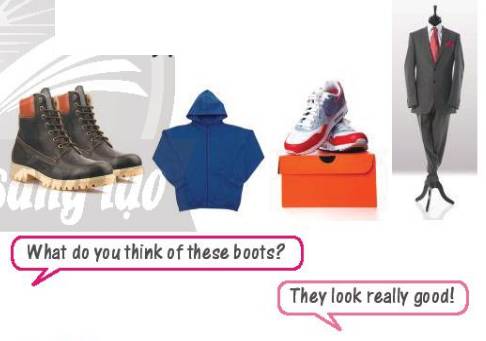
Work in pairs. Ask and answer questions about the items below. Use the key phrases.
Đọc tiếp
Work in pairs. Ask and answer questions about the items below. Use the key phrases.

Tham khảo
A: Why don’t you try this indigo jacket on?
B: It’s not really my style.
A: What do you think of these sneakers?
B: They look really good. They’re expensive, though.
A: Why don’t you try this suit?
B: It’s a bit tight!
Đúng 0
Bình luận (0)

SGK Friend Plus

18 tháng 2 2023 lúc 15:49
5. Work in groups. Find out who is sports crazy. Change the words in blue in exercise 3 and ask and answer the questions. Use the Key Phrases.(Làm việc nhóm. Tìm ra ai là người cuồng thể thao. Thay đổi các từ có màu xanh lam trong bài tập 3 để hỏi và trả lời các câu hỏi. Sử dụng các cụm từ chính.)- Do you do any sports? (Bạn có chơi môn thể thao nào không?)- Yes, I enjoy playing basketball. Im in the school team. And you?(Có, mình thích chơi bóng rổ. Mình nằm trong đội bóng rổ của trường. Còn bạ...
Đọc tiếp
5. Work in groups. Find out who is sports crazy. Change the words in blue in exercise 3 and ask and answer the questions. Use the Key Phrases.
(Làm việc nhóm. Tìm ra ai là người cuồng thể thao. Thay đổi các từ có màu xanh lam trong bài tập 3 để hỏi và trả lời các câu hỏi. Sử dụng các cụm từ chính.)
- Do you do any sports?
(Bạn có chơi môn thể thao nào không?)
- Yes, I enjoy playing basketball. I'm in the school team. And you?
(Có, mình thích chơi bóng rổ. Mình nằm trong đội bóng rổ của trường. Còn bạn thì sao?)


A: Do you do any sports?
(Bạn có chơi môn thể thao nào không?)
B: Yes, I enjoy playing badminton. I'm in the city team.
(Vâng, tôi thích chơi cầu lông. Tôi ở trong đội tuyển của thành phố.)
A: What sport do you watch on TV?
(Bạn xem môn thể thao nào trên TV?)
B: I watch football matches. I'm a football fan.
(Tôi xem các trận đấu bóng đá. Tôi là một người hâm mộ bóng đá.)
A: Are there any sports do you want to try?
(Có môn thể thao nào bạn muốn thử không?)
B: Yes, I want to try swimming.
(Vâng, tôi muốn thử bơi lội.)
Đúng 0
Bình luận (0)
SGK Friends Plus - Trang 11
19 tháng 8 2023 lúc 18:32
USE IT! Work in pairs. Ask and answer questions about the topics in exercise 3 using the key phrases. Tell the class what your partner’s favorite interest is.
Do you spend much money on comics?
Do you spend much money on comics?

Student A: Do you spend much money on comics?
Student B: No, I don't spend much money on comics. I prefer to read them online or borrow them from friends.
Student B: Do you enjoy reading books?
Student A: Yes, I love reading books. I mostly enjoy fantasy and mystery genres.
Student A: Are you involved in any sports or physical activities?
Student B: Yes, I play basketball twice a week with a local team.
Student B: Are you interested in music?
Student A: Absolutely! I listen to a wide range of music genres, but my favorite is alternative rock.
Student A: Do you watch movies or TV shows regularly?
Student B: Yes, I'm a big movie enthusiast. I enjoy watching action and sci-fi films.
Student B: Are you a gamer?
Student A: Yes, I am. I like playing strategy and role-playing games.
Student A: Do you actively participate in any social media platforms?
Student B: Yes, I use Instagram and Twitter the most.
Student B: Are you a fan of any particular sports team or have a favorite athlete?
Student A: Yes, I'm a huge fan of Manchester United football club.
Student A: Have you ever attended any concerts, live performances, or sporting events?
Student B: Yes, I've been to a few concerts and sporting events. It's always an exciting experience.
Student B: Are you interested in learning new skills or taking up new hobbies?
Student A: Definitely! I would love to learn how to play a musical instrument, maybe the guitar.
Student A: Do you have any other specific interests or activities that you would like to mention?
Student B: Apart from my hobbies, I also enjoy hiking and exploring nature in my free time.
Student A: My partner's favorite interest is basketball. They play it twice a week with a local team.
....
Đúng 1
Bình luận (0)

A: Do you spend any time playing sport?
(Bạn có dành thời gian chơi thể thao không?)
B: Yes, I’m a big football fan. Are you interested in fashion?
(Có, mình người hâm mộ bóng đá cuồng nhiệt mà. Bạn có thích thời trang không?)
A: No, I’m not really into clothes or anything like that. I’m crazy about music.
(Không, mình không thật sự thích quần áo hay bất cứ cái gì như thế. Mình đam mê âm nhạc cơ.)
Đúng 0
Bình luận (0)
SGK Friend Plus
17 tháng 2 2023 lúc 22:36
Exercise 6. USE IT! Work in pairs. Complete questions 1-7 with time expressions from the Key Phrases. Ask and answer the questions.(Thực hành! Làm việc theo cặp. Hoàn thành câu hỏi 1-7 với cụm từ chỉ thời gian từ phần Key Phrases. Hỏi và trả lời các câu hỏi.)1. What ... do ... ?2. Who ... go out with ... ?3. What time... get up/go to bed...?4. What TV programmes... your dad watch ... ?5. When .... do your homework...?6. How ... your mum relax ...?7. Where... go ... ?A: What do you do at the week...
Đọc tiếp
Exercise 6. USE IT! Work in pairs. Complete questions 1-7 with time expressions from the Key Phrases. Ask and answer the questions.
(Thực hành! Làm việc theo cặp. Hoàn thành câu hỏi 1-7 với cụm từ chỉ thời gian từ phần Key Phrases. Hỏi và trả lời các câu hỏi.)
1. What ... do ... ?
2. Who ... go out with ... ?
3. What time... get up/go to bed...?
4. What TV programmes... your dad watch ... ?
5. When .... do your homework...?
6. How ... your mum relax ...?
7. Where... go ... ?
A: What do you do at the weekend?
(Bạn thường làm gì vào cuối tuần?)
B: I usually visit friends and watch TV.
(Tôi thường thăm bạn bè và xem tivi.)
A: What do you always do in the morning?
B: I always get up and brush my teeth.
A: Who do you go out with at 7 a.m?
B: I go out with my family.
A: What time do you go to bed?
B: I always go to bed before 10 p.m?
A: What TV programmes does your dad watch in the evening?
B: He usually watches news at 7 p.m.
A: When do you do your homework?
B: I often do my homework after dinner.
A: How often does your mum relax?
B: She always relax every night.
A: Where do you go in sumer vacation?
B: I and my family normally visit my grandparents.
Đúng 0
Bình luận (0)
Tạm dịch:
A: Bạn luôn làm gì vào buổi sáng?
B: Tôi luôn thức dậy và đánh răng.
A: Bạn đi chơi với ai lúc 7 giờ sáng?
B: Tôi đi chơi với gia đình.
A: Mấy giờ bạn đi ngủ?
B: Tôi luôn đi ngủ trước 10 giờ tối?
A: Những chương trình truyền hình nào mà bố bạn xem vào buổi tối?
B: Bố thường xem tin tức lúc 7 giờ tối.
A: Khi nào bạn làm bài tập về nhà?
B: Tôi thường làm bài tập về nhà sau bữa tối.
A: Mẹ bạn thư giãn bao lâu một lần?
B: Mẹ luôn thư giãn mỗi đêm.
A: Bạn đi đâu trong kỳ nghỉ hè?
B: Tôi và gia đình tôi thường đến thăm ông bà của tôi.
Đúng 0
Bình luận (0)
SGK Friend Plus
18 tháng 2 2023 lúc 14:53
Exercise 5. USE IT! Work in groups. Imagine that one of you is a lottery winner. Ask and answer questions about now and usually. Use the present simple and the present continuous forms of the verbs in the box.(Thực hành! Làm việc theo nhóm. Tưởng tượng một trong số các em trúng số. Hỏi và trả lời những câu hỏi về bây giờ và thông thường. Sử dụng dạng thì hiện tại đơn và hiện tại tiếp diễn của động từ trong khung.)listen to wear read sit speak ...
Đọc tiếp
Exercise 5. USE IT! Work in groups. Imagine that one of you is a lottery winner. Ask and answer questions about now and usually. Use the present simple and the present continuous forms of the verbs in the box.
(Thực hành! Làm việc theo nhóm. Tưởng tượng một trong số các em trúng số. Hỏi và trả lời những câu hỏi về bây giờ và thông thường. Sử dụng dạng thì hiện tại đơn và hiện tại tiếp diễn của động từ trong khung.)
listen to wear read sit speak watch think about |
A: What do you usually wear?
B: I usually wear...
A: What are you wearing now?
B: I'm wearing ...
A: What do you usually listen to?
B: I usually listen to pop songs?
A: What are listening to now?
B: I’m listening to US-UK rap.
A: What do you usually wear?
B: I usually wear jeans and T-shirt?
A: What are wearing now?
B: I’m wearing dress, shirt and skirt.
A: What do you usually read?
B: I usually read old comic books.
A: What are you reading now?
B: I’m reading fashion magazine in English.
A: What do you usually think about?
B: I usually think about how to make money.
A: What are thinking about now?
B: I’m thinking about how to spend money.
Đúng 0
Bình luận (0)
Tạm dịch:
A: Bạn thường nghe gì?
B: Tôi thường nghe những bản nhạc pop?
A: Bây giờ bạn đang nghe gì?
B: Tôi đang nghe rap Âu Mỹ.
A: Bạn thường mặc gì?
B: Tôi thường mặc quần jean và áo phông?
A: Bây giờ bạn đang mặc gì?
B: Tôi đang mặc váy, áo sơ mi và váy.
A: Bạn thường đọc gì?
B: Tôi thường đọc truyện tranh cũ.
A: Hiện tại bạn đang đọc gì?
B: Tôi đang đọc tạp chí thời trang bằng tiếng Anh.
A: Bạn thường nghĩ về điều gì?
B: Tôi thường nghĩ về cách kiếm tiền.
A: Bây giờ đang nghĩ về điều gì?
B: Tôi đang nghĩ về cách tiêu tiền.
Đúng 0
Bình luận (0)
SGK Friends Plus - Trang 6
19 tháng 8 2023 lúc 16:50
USE IT! Work in pairs. Ask and answer questions to compare your daily routines. Use time expressions, adverbs of frequency and the words and phrases in exercises 1 and 2. Are your routines similar?
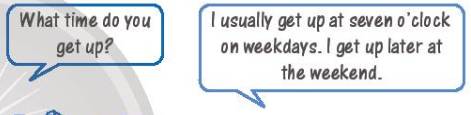
A: What time do you go to bed in the evening?
(Bạn đi ngủ lúc mấy giờ vào buổi tối?)
B: I often go to bed at twenty-two o’clock. Sometimes, I go to bed at eleven p.m to listen to music or read books. How do you relax?
(Tôi thường đi ngủ lúc mười giờ tối. Thỉnh thoảng, tôi đi ngủ lúc mười một giờ để nghe nhạc hoặc đọc sách. Còn bạn thư giãn bằng cách nào?)
A: I normally go shopping on Saturday mornings with my Mom. Do you usually go shopping at the weekend?
(Tôi thường hay đi mua sắm vào các buổi sáng thứ Bảy với mẹ của tôi. Bạn có thường đi mua sắm vào cuối tuần không?)
B: No, only once a month. I’d like to cook at home and spend time tidying my room.
(Không, chỉ một lần một tháng thôi. Tôi thích nấu ăn ở nhà và dành thời gian dọn dẹp căn phòng của mình hơn.)
Đúng 0
Bình luận (0)
SGK Friends Plus - Trang 64
20 tháng 8 2023 lúc 22:18
USE IT! Work in pairs. Read the situation, prepare and practise a new dialogue. Use the key phrases and the dialogue in exercise 1 to help you.Student A: Ask your partner what the problem is: he/she looks tired. Listen, find out some more information, then offer some advice.Student B: Youre not sleeping well and youre always tired. Youre worried that your school work is getting worse. You listen to music and text your friends when you should be asleep.
Đọc tiếp
USE IT! Work in pairs. Read the situation, prepare and practise a new dialogue. Use the key phrases and the dialogue in exercise 1 to help you.
Student A: Ask your partner what the problem is: he/she looks tired. Listen, find out some more information, then offer some advice.
Student B: You're not sleeping well and you're always tired. You're worried that your school work is getting worse. You listen to music and text your friends when you should be asleep.
Student A: Ask your partner what the problem is: he / she looks tired. Listen, find out some more information, then offer some advice.
A: Hi, B. Is anything the matter? You look really tired.
B: I'm really concerned about the English course I’m doing. It’s too difficult.
A: Have you spoken to your teachers about it?
B: No. I'm so worried, I haven't told my teacher about it.
A: My advice is to get help now. If you don't, things will only get worse
B: I don’t know what to do.
A: Don’t panic. But you need to speak to someone about it.
B: You're right . I'll go and talk to my teacher now. Thanks, A.
A: No problem.
Student B: You’re not sleeping well and you're always tired. You're worried that your school work is getting worse. You listen to music and text your friends when you should be asleep.
A: Hi, B. Is anything the matter? You look really tired.
B: I'm not sleeping well and I'm always tired.
A: What happened?
B: No. I'm worried about school work is getting worse. I listen to music and text my friends when I'm asleep.
A: My advice is you should go to bed earlier and stay away from your electronic devices.
B: You're right . I'll try to go to bed early. Thanks, A.
A: No problem.
Đúng 1
Bình luận (0)