

Nguyễn Quốc Đạt
- Giáo viên CTVVIP
-

Cập nhật ảnh bìa

Tải lên
Từ máy tính của bạn
Cập nhật ảnh đại diện

Tải lên
Từ máy tính của bạn
Học tại trường
Chưa có thông tin
Đến từ
Quảng Bình , Chưa có thông tin
Số lượng câu hỏi
31763
Số lượng câu trả lời
32091
Điểm GP
595
Điểm SP
1704
Người theo dõi (79)


Đang theo dõi (12)




Chủ đề:
V. ListeningCâu hỏi:
Tick (✓) the columns to complete the following table about you. Compare your answer in pairs.
| Yes | No |
1. Are you interested in learning new things? |
|
|
2. Do you set your learning goals and make plans to achieve them? |
|
|
3. Do you try to understand a problem on your own before asking for help? |
|
|
4. Do you want to know more about the world? | |
Chủ đề:
IV. SpeakingCâu hỏi:
Read the following instructions on how to do laundry. Circle the correct answers.
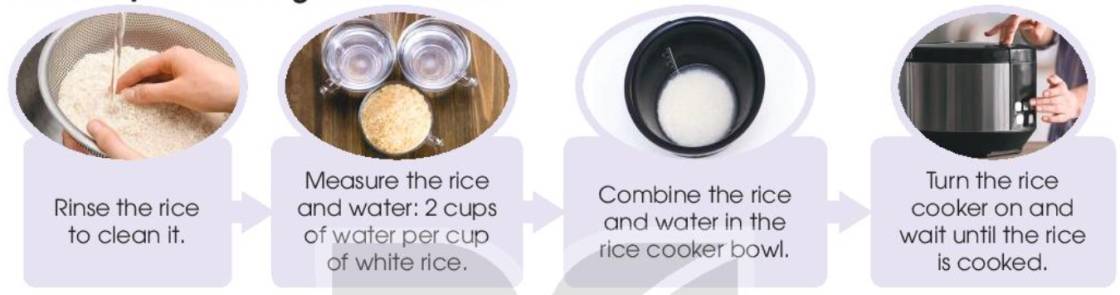
There are several simple steps in doing laundry. First of all, (1) sort / don’t sort your clothes by colour. You should separate them into whites and colours and wash them separately. (2) Secondly / Finally, add the washing powder or liquid. Read the instructions on the packet to make sure you use the right amount. Then, (3) load / you load the washing machine and turn it on. Make sure you place the items one at atime. Don’t put too many items as they need room to move about in the water. When the washing machine stops, (4) remove / you will remove the wet clothes. You can hang the items to dry, or put them in the dryer. Remember that air-drying clothes saves energy and money. (5) Finally / Afterwards, don’t forget to hang or fold each item. You could also iron your clothes before storing them in the wardrobe or drawer.
Chủ đề:
IV. SpeakingCâu hỏi:
Work in pairs. Discuss these questions.
a. Have you ever done your laundry? If yes, how did you do it?
b. Below are some steps to do laundry. Put them in the correct order.

A. Hang or fold, and store your own clothes
B. Sort the clothes by colour
C. Remove the wet clothes from the washing machine and dry them
D. Add the washing powder or liquid
E. Load the washing machine and turn it on
Chủ đề:
III. ReadingCâu hỏi:
Read the text again and match the highlighted phrases in the text with their meanings.
1. get around | a. to start doing something regularly so that it becomes a habit |
2. come up with | b. to perform and complete something |
3. carry out | c. to go or travel to different places |
4. get into the habit of | d. to use something to achieve a particular result or benefit |
5. make use of | e. to produce or find an answer or a solution |
Chủ đề:
III. ReadingCâu hỏi:
Read the text. Match the paragraphs (A-C) with the headings (1-5). There are TWO extra headings.
1. Manage your money
2. Relax and sleep well
3. Develop time-management skills
4. Improve your decision-making skill
5. Learn basic, but important life skills
Becoming independent is important for teenagers. Below are the necessary skills you should learn to achieve independence for the future.
A. ___________________
First, make sure you can safely get around by yourself using public transport, walking, or cycling. Second, learn to communicate well and develop good relationships with people. Do some part-time jobs and get to know how to manage your money. You should also learn to cook healthy meals for your family. Finally, help your parents with household chores like cleaning and doing laundry.
B. ___________________
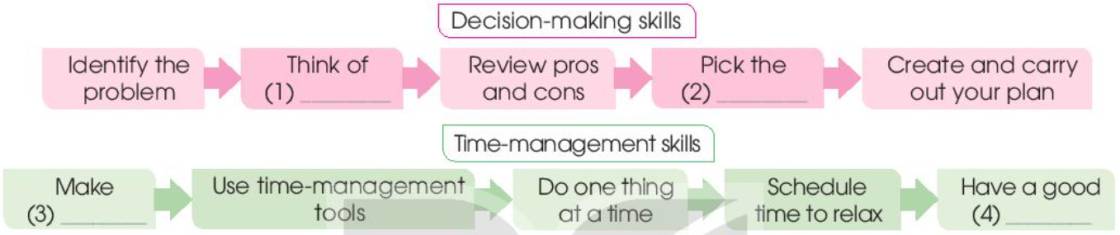
To begin with, identify the problem and come up with as many solutions as possible. Write down the options, so you can review the advantages and disadvantages of each one. This will help you see which option could be the best for you. Don’t base your decision on emotion only. Once you have made your choice, create a plan of specific steps to move forward. Then carry out your plan, and think about whether you have achieved the result you wanted.
C. ___________________
First of all, get into the habit of making a to-do-list every day or week. Make use of time-management tools, such as apps or diaries, to know what you need to do next. In addition, decide how much time you need for each task and always do one thing at a time to make sure you complete it. Schedule time to relax as well, and make sure you sleep at least nine hours each night. A good night's sleep is necessary for teenage brain development and good health. Becoming independent is not easy, but itis not as challenging as you may think. It’s about learning useful skills, making decisions by yourself, and knowing how to spend your time.
Chủ đề:
III. ReadingCâu hỏi:
Tick (✓) the appropriate box to see how independent you are. Add up your points. If your total score is nine or above, you are independent. Compare with a partner.
How often do you … ? | Always (3 points) | Sometimes (2 points) | Never (1 point) |
1. go to school by yourself |
|
|
|
2. cook meals for your family |
|
|
|
3. communicate well with people |
|
|
|
4. think carefully before making decisions |
|
|
|
5. plan how to save and spend your pocket money |
|
|
|