HOC24
Lớp học
Môn học
Chủ đề / Chương
Bài học
Tuyển Cộng tác viên Hoc24 nhiệm kì 28 tại đây: https://forms.gle/GrfwFgzveoKLVv3p6
Một xe contener có trọng lượng 26000N. Tính áp suất của xe lên mặt đường, biết diện tích tiếp xúc với mặt đất là 130. Hãy so sánh áp suất đó với áp suất của một người nặng 45kg có diện tích tiếp xúc 2 bàn chân với mặt đất là
Một xe tải có trọng lượng 340000N
a. Tính áp suất của xe tăng lên mặt đường nằm ngang, biết rằng diện tích tiếp xúc của xe với mặt đất là
b. Hãy so sánh áp suất trên với áp suất của một ô tô nặng 20000N có diện tích tiếp xúc của các bánh xe là 250
Có hai đèn ghi Đ1 (12V – 12W), Đ2 (6V – 9W) và nguồn điện có hiệu điện thế không đổi U = 18V.
a) Tính cường độ dòng điện định mức của hai đèn?
b) Để đèn sáng bình thường khi mắc vào hiệu điện thế U thì phải dùng biến trở R thì biến trở được mắc như thế nào? Vẽ sơ đồ mạch điện?
c) Nếu chỉ có hai bóng đèn mắc nói tiếp với nhau thì hiệu điện thế lớn nhất của đoạn mạch là bao nhiêu? Tính công suất của mỗi đèn?
Một quạt điện dùng trên xe ôtô có ghi 12V - 15W
a/ Cho biết ý nhĩa của của các số ghi này.
b/ Tính cường độ dòng điện chạy qua quạt khi quạt hoạt động bình thường.
c/ Tính điện năng quạt sử dụng trong một giờ khi chạy bình thường.
d/ Tính điện trở của quạt. Biết hiệu suất của quạt là 85%.
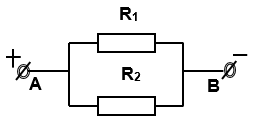
Đoạn mạch AB gồm hai điện trở R1 = 8 và R2 = 12 mắc song song. Đặt hiệu điện thế U = 24 V không đổi giữa hai đầu đoạn mạch AB.
a. Tính điện trở tương đương của đoạn mạch AB và cường độ dòng điện chạy qua các điện trở.
b. Tính công suất tiêu thụ của đoạn mạch AB, công của dòng điện sản ra ở toàn đoạn mạch trong 12 phút.
c. Điện trở R1 làm bằng dây dẫn có điện trở suất 0,5.10-6 m, tiết diện 0,6 mm2. Tính chiều dài của dây dẫn này.
d. Mắc thêm vào mạch một điện trở R3 = 5Ω nối tiếp với R1. Tính cường độ dòng điện mạch chính.
In Korea, in former days, the marriage between a man and womanrepresented the joining of two families, rather (1) ________ the joiningof two individuals. The event (2) ________ Taerye (Great Ritual),and people from all over the village or neighborhood participated. The ceremonies and eventssurrounding the actual marriage were long and (3) ________. Professional matchmakers paired up likelycandidates for marriage, with the new couple often meeting for the first time at their wedding. Thefamilies considered many factors in the decision, consulting with fortunetellers for (4) ________ about the couple’s future life together. Duringthe Chosun period, people married (5) ________their early teens,with the girl often being several years older than the boy.Question 1: A. more B. as C. than D. more thanQuestion 2: A. often called B. war often called C. is often called D. has often calledQuestion 3: A. elaborate B. elaboration C. elaborately D. elaboratenessQuestion 4: A. predictions B. situations C. evaluations D. attentionsQuestion 5: A. in B. for C. on D. from
Work engineers are (1) ________ riding with drivers, timing everything from stops at traffic lights, towait at customer’s doorway, to stairway climbs, to coffee break. And they are not (2) ________ topointing out the occasional inefficiency. Additionally, supervisors ride with the least good drivers, notinghow they work and constantly (3) ________them until their work is up to standard. The (4) ________ ofall this work engineering is efficiency, and UPS has been called one of the most efficient companiesanywhere. It’s also a highly profitable company. Most drivers take the regimentation in stride: manyshow pride in meeting the UPS standards each day. Others, however, feel that they are constantly beingpushed, that it is impossible for them to (5) ________at work. UPS officials claim that the standardsprovide accountability. And, they say, employees who work according to UPS standards should feel lesstired at the end of the day.Question 1: A. consistently B. continually C. constructively D. chronicallyQuestion 2: A. impolite B. brave C. intimate D. averseQuestion 3: A. scolding B. criticizing C. encouraging D. correctingQuestion 4: A. task B. reason C. object D. targetQuestion 5: A. rest B. relieve C. relax D. restrain
I don’t usually play tricks on people, but when our boss, Mr Budd, bought himself a new hat, my friendhad an idea that was impossible to resist. Every day Mr Budd (1) ________ hang up his hat in the hallwayand disappear into his office. So one lunch time we went into town and bought two hats identical to MrBudd’s, except that one was much larger, and the other much smaller, than his. When we (2) ________ tothe office, we took Mr Budd’s hat off the hook and replaced it with the large one. That evening he put thehat on and went home, saying nothing to anyone in spite of the fact that his hat was resting on his ears.The next day we (3) ________the small hat for the large one, and Mr Budd went home with it sitting highon top of his head. He looked a bit worried, but he still didn’t say a word to anyone. This continued for afew weeks. Sometimes we would put Mr Budd’s (4) ________ hat on the hook, sometimes one of theothers. Everyone in the office knew about the joke, except Mr BudD. Eventually, he got so worried thathe went to the doctor, (5) ________ that his head was growing and shrinking day by day.Question 1: A. use to B. would C. had to D. alwaysQuestion 2: A. returned back B. arrived C. approached D. got backQuestion 3: A. replaced B. provided C. supplied D. substitutedQuestion 4: A. first B. original C. official D. genuineQuestion 5: A. thought B. considered C. convinced D. believed
Amelia Earhart, America’s most famous woman pilot, was born into a wealthy family in 1897. At the ageof 23, she began taking flying lessons in California. (1) ________ having a number of crashes, whichwere fairly common in the early days of aviation, she decided to make flying her career. In 1932, shebecame the first woman to make a solo flight across the Atlantic. She set out on May 20th, and not only(2) ________ in arriving safely, but she managed to do it in record time as well. She was awardedhonours of all kinds. As her fame grew, she travelled round the country giving lectures and (3) ________women’s rights. In 1937, she decided to do something that no woman had tried before - to fly all the wayround the world. She reached Australia, and set off on the last part of her journey across the Pacific onJuly 2nd. A few hours later she sent a radio message saying she was running (4) ________ fuel. Thenthere was silence. President Roosevelt immediately had the area (5) ________, but the 9 ships and 66planes were unable to find any sign of her. Since her death, there have been many stories about her; somesay that she was captured by the Japanese, others claim that she lived on a South Pacific island with afisherman. However, although many people have tried to work out exactly what happened, no trace of heror the plane has ever been found.Question 1: A. Despite of B. In spite of C. Although D. Due toQuestion 2: A. she succeeded B. does she succeed C. did she succeed D. succeeded sheQuestion 3: A. talking B. developing C. promoting D. achievingQuestion 4: A. from B. short of C. lack of D. empty ofQuestion 5: A. investigated B. discovered C. looked for D. searched
The Solar System is (1) ________ the Sun and eight planets: Mercury, Venus, Earth, Mars, Jupiter,Saturn, Uranus and Neptune. The first four planets are (2) ________ terrestrial planets because they arerocky. They are smaller and denser than the outer planets. They contain a high amount of metals and theyhave less gas than the outer planets. Mercury has no atmosphere, but Venus, Earth and Mars haveatmospheres of varying thicknesses. Their rotation is slower and their orbits are closer together. The outerfour planets are known as gas giants. They are also known as Jovian planets, (3) ________ the planetJupiter because of their gigantic Jupiter-like (4) ________. They have a large diameter and a very thickatmosphere. Although their surfaces contain large amounts of gases, their cores are probably solid. Allfour Jovian planets have rings although only Saturn’s ring system is (5) ________ from Earth.Question 1: A. made up of B. made from C. made of D. made upQuestion 2: A. known B. called C. referred to D. spokenQuestion 3: A. named after B. called as C. named following D. referred toQuestion 4: A. expression B. description C. appearance D. faceQuestion 5: A. watched B. looked C. available D. observed