In pairs, talk about the three trips and choose which one you will take together.

Những câu hỏi liên quan

SGK I-learn Smart World

9 tháng 2 2023 lúc 8:19
a. You are talking to a friend about your family. Choose three family members to talk about. Use two adjectives to describe each person and explain why with so and because. In pairs: Take turns asking about family members.(Em đang nói với một người bạn về gia đình của em. Chọn ba thành viên gia đình để nói về. Sử dụng hai tính từ để mô tả từng người và giải thích tại sao sử dụng so và because. Theo cặp: Lần lượt hỏi về các thành viên trong gia đình của nhau.)- Whats your brother/sister like?(Anh...
Đọc tiếp
a. You are talking to a friend about your family. Choose three family members to talk about. Use two adjectives to describe each person and explain why with so and because. In pairs: Take turns asking about family members.
(Em đang nói với một người bạn về gia đình của em. Chọn ba thành viên gia đình để nói về. Sử dụng hai tính từ để mô tả từng người và giải thích tại sao sử dụng so và because. Theo cặp: Lần lượt hỏi về các thành viên trong gia đình của nhau.)
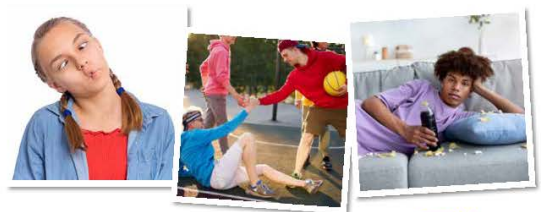
- What's your brother/sister like?
(Anh/chị của bạn như thế nào?)
- He/She's easygoing, so he/she doesn't get angry.
(Anh ấy/cô ấy là người dễ tính, vì vậy anh ấy/cô ấy không tức giận.)
He/She always helps me with my homework because he/she's very intelligent!
(Anh ấy/cô ấy luôn giúp tôi làm bài tập vì anh ấy/cô ấy rất thông minh!)



A: What’s your brother like?
(Anh của bạn như thế nào?)
B: He is helpful because he does my chores with me.
(Anh ấy có ích vì anh ấy làm việc nhà cùng tôi.)
Đúng 0
Bình luận (0)

Choose one leisure activity from 2 or 3. In pairs, talk about it. Try to keep going for one minute each. When the time is up, find a new partner and talk about another activity. You may: describe the leisure activity, say if you have done this activity or not, share your feelings about the activity.

2 leisure activity :
- Sleeping: That makes your mindless after a whole tired day with works or maybe the stress of learning at school. Also, it improves your health and satisfies a lot.
-Eating: keeps your mouth every time busy with chewing.
Đúng 1
Bình luận (0)

Choose one leisure activity in pairs,talk about it.Try to keep going for one minute each.When the time is up ,find a new partner and talk about another activity

bạn tham khảo ở đay nha
https://www.tienganh123.com/doc-tieng-anh-trinh-do-trung-binh-intermediate/1729-benefits-of-playing-sports.html
Đúng 1
Bình luận (0)
SGK Friends Plus
7 tháng 2 2023 lúc 22:31
6. Work in pairs. Swap the sentences you wrote in exercise 5. Choose three of your partner's sentences and write a question about each one using the past continuous.
Some birds were singing. - Which kind of birds were singing? (Vài con chim đang hót – Chim gì đang hót?)
Some schoolchildren were arguing. - Which topics were the schoolchildren arguing about? (Vài đứa học sinh đang cãi nhau. – Chúng cãi nhau về chuyện gì?)
A police officer was walking on the street. - Can you guess where was the police officer going to? (Một sĩ quan cảnh sát đang đi bộ trên đường. – Bạn có đoán được chú cảnh sát đang đi đâu không?)
Đúng 0
Bình luận (0)
SGK Global Success - Trang 105

10 tháng 9 2023 lúc 16:34
Work in pairs. Talk about your experiences of peer pressure. Use the following guiding questions.
- Which example of peer pressure (A-F) in 1 affects you most? Why?
- Which one affects you the least? Why?
- Which are examples of positive peer pressure?
Positive peer pressure is when your friends encourage you to do something that benefits you or others, or when you inspire each other to achieve common goals. Some examples of positive peer pressure are:
- Encouraging your friend to exercise regularly and join you in a fitness class.
- Supporting your friend who wants to quit smoking or drinking and avoiding situations where they might be tempted.
- Volunteering with your friends for a local charity or community project.
- Studying together and helping each other to understand difficult concepts or prepare for exams.
- Standing up to bullying or discrimination together and promoting a culture of respect and inclusion.
- Expressing your creativity and sharing your talents with each other, such as writing, singing, or drawing.
Positive peer pressure can build trust, self-esteem, and social skills, and foster a sense of belonging and purpose. It can also contribute to a healthier and more positive school or community culture.
Đúng 0
Bình luận (0)

SGK Global Success - Trang 129

19 tháng 8 2023 lúc 1:38
Work in groups. Take turns to talk about one of the three planets in 3.
Example:
I would like to tell you about Mercury. It is the smallest planet ...

Tham khảo
I would like to tell you about Mercury. It is the smallest planet. It is the closest planet to the sun, and it doesn’t have any moons. It is hot in the daytime but very cold at night. Mercury doesn’t have atmosphere so there is no wind or weather.
Đúng 1
Bình luận (0)
SGK Friends Plus - Trang 84
21 tháng 8 2023 lúc 15:44
Work in pairs. Talk about which type of films you like watching, and which ones you aren’t keen on.
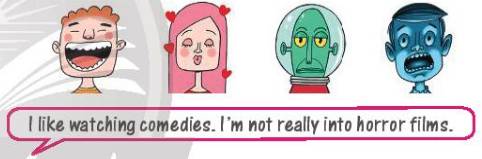
A: I love watching romances. I don’t fancy a thriller.
B: I like science fiction. I’m not really into action films.
Đúng 0
Bình luận (0)
SGK Friends Global - Trang 47
10 tháng 11 2023 lúc 23:32
Work in pairs. You and a friend want to go cycling this weekend, but where? You have two options A and B to choose from. Agree on the one which you consider more appropriate, and explain why you reject the other one.
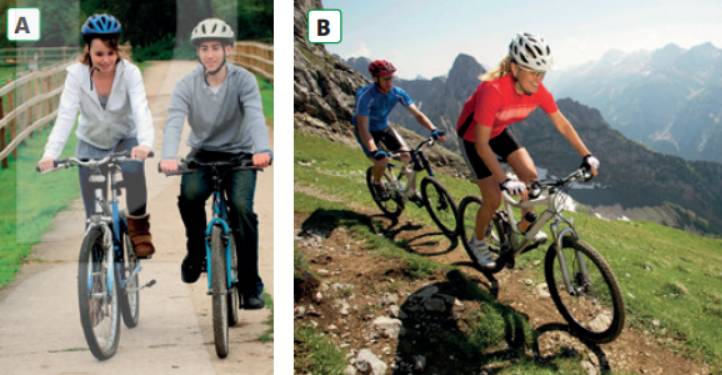
A: Hey, do you want to go cycling this weekend?
B: Yeah, sure! Where do you want to go?
A: I was thinking we could either go to option A or option B. option A is a flat path by the beach, and option B is a scenic trail near the mountains,
B: Hmm, both sound good. Which one do you prefer?
A: I think we should go with option B because it offers more of a challenge and has some amazing views of the surrounding mountains. Plus, the cooler temperatures will be great for cycling.
B: That sounds awesome! Why not option A, though?
A: Well, I think option B might be a bit too crowded with tourists this time of year, and it might be too hot and humid for us to fully enjoy the ride.
B: Ah, got it. Option B it is then! Let's plan to meet early and make a day of it.
A: Sure. Can't wait to hit the trail!
Tạm dịch:
A: Này, bạn có muốn đi xe đạp vào cuối tuần này không?
B: Vâng, chắc chắn rồi! Bạn muốn đi đâu?
A: Tôi đang nghĩ chúng ta có thể chọn phương án A hoặc phương án B. Phương án A là con đường bằng phẳng bên bờ biển và phương án B là con đường mòn có cảnh đẹp gần núi,
B: Hmm, cả hai đều nghe hay. Bạn thích cái nào hơn?
A: Tôi nghĩ chúng ta nên chọn phương án B vì nó mang lại nhiều thử thách hơn và có một số cảnh quan tuyệt vời của những ngọn núi xung quanh. Ngoài ra, nhiệt độ mát hơn sẽ rất tốt cho việc đạp xe.
B: Điều đó nghe thật tuyệt! Vậy tại sao không phải là tùy chọn A?
A: Chà, tôi nghĩ lựa chọn B có thể hơi đông khách du lịch vào thời điểm này trong năm và có thể quá nóng và ẩm để chúng tôi có thể tận hưởng trọn vẹn chuyến đi.
B: À, hiểu rồi. Vậy chốt kế hoạch B nhé! Hãy lên kế hoạch gặp nhau sớm và thực hiện nhé.
A: Chắc chắn rồi. Không thể chờ đợi để đi vào đường mòn!
Đúng 0
Bình luận (0)
SGK Friends Global - Trang 41
8 tháng 11 2023 lúc 21:55
VOCABULARY In pairs, read the adjectives below and talk about situations in which you experience those feelings.Adjectives to describe feelingsafraidanxious ashamed crossdisgusted enviousproud I sometimes feel afraid if I see a very large spider.
Đọc tiếp
VOCABULARY In pairs, read the adjectives below and talk about situations in which you experience those feelings.
Adjectives to describe feelings
afraid | anxious | ashamed | cross |
disgusted | envious | proud |
|
I sometimes feel afraid if I see a very large spider.
- I feel anxious when I can't do my test.
(Tôi cảm thấy lo lắng khi tôi không thể làm bài kiểm tra của mình.)
- I sometimes feel ashamed when I am made fun of by my friend.
(Đôi khi tôi cảm thấy xấu hổ khi bị bạn bè đem ra làm trò cười.)
- I will feel cross when someone tells a lie to me.
(Tôi sẽ cảm thấy khó chịu khi ai đó nói dối tôi.)
- I feel disgusted when I eat some bad food.
(Tôi cảm thấy ghê tởm khi tôi ăn một số món ăn dở.)
- I feel envious when I see my friends have new smartphones.
(Tôi cảm thấy ghen tị khi thấy bạn bè mình có điện thoại thông minh mới.)
- I feel proud when I get the highest grade in my class.
(Tôi cảm thấy tự hào khi đạt điểm cao nhất trong lớp.)
Đúng 0
Bình luận (0)
SGK Friends Global - Trang 32
7 tháng 11 2023 lúc 21:59
Work in pairs. Prepare to do the task in exercise 3.
- Choose three activities that you would like to do using the list in exercise 1 or your own ideas. Make sure you and your partner choose different activities.
- Make notes about:
a. why you want to do the activities you have chosen.
b. why you do not want to do the activities your partner has chosen.
My three activities: surfing, climbing, kayaking
(Ba hoạt động của tôi: lướt sóng, leo núi, chèo thuyền kayak)
My partner’s three activities: hiking, hang-gliding, mountain biking
(Ba hoạt động của đối tác của tôi: đi bộ đường dài, đi tàu lượn, đạp xe leo núi)
a. why you want to do the activities you have chosen.
(tại sao bạn muốn thực hiện các hoạt động bạn đã chọn.)
- suitable location.
(vị trí phù hợp.)
- enjoy new feelings on the water.
(tận hưởng cảm giác mới lạ trên mặt nước.)
- beautiful view on the top of a mountain.
(góc ngắm cảnh đẹp trên đỉnh núi.)
b. why you do not want to do the activities your partner has chosen.
(tại sao bạn không muốn thực hiện các hoạt động mà đối tác của bạn đã chọn.)
- have to walk long distances.
(phải đi bộ đường dài.)
- have to buy special equipment.
(phải mua thiết bị đặc biệt.)
- it’s tiring.
(nó mệt mỏi.)
Đúng 0
Bình luận (0)