Scan the text. Then underline the opposites for the words below.
gently loudly slowly |

Scan the text. Then underline the opposites for the words below.
gently loudly slowly |

Make compound nouns using the words in the boxes. Then scan the text to find three compound nouns from the list. What do they mean?
| best book story work |
| sellers shop telling worm |

- bestsellers: bán chạy nhất
- booksellers: người bán sách
- bookshop: hiệu sách
- bookworm: mọt sách
- storytelling: kể chuyện
- workshop: hội thảo

1. Read the text. Match the words in blue with the opposites in the box. Then listen and check.
(Đọc văn bản. Nối các từ màu xanh với từ trái nghĩa trong khung. Sau đó nghe và kiểm tra.)
unpopular bad new cheap horrible boring fast big |
Send us your photos!
What have you got ...
…in your pocket?
I've got money, a pen, my ID card for school (that photo isn't very nice!) and my mobile phone. It's old and slow now and it hasn't got a good camera. I want a new mobile, but they're expensive.  (Paul)
…on your desk?
I've got books, one or two old video games, and these mini speakers. They're small, but they're really good.  And I've got a photo of my cousins in Australia. They've got a pet parrot. His name's Sinbad and he's really popular with my cousins' friends. We haven't got a pet. (Ben)
…in your bag?
I've got my books for school, my mobile and I've got this present for my dad. He hasn't got this book. It's about cooking and it's very interesting (if you like cooking!). (Maria)
Underline the content words and circle the function words in each sentences. Then practies reading the sentences aloud:
1. This region is famous for making needles
2.
C. CHOOSE THE VERB AND FILL IN THE BLANKS WITH WORDS BELOW.
Silently – badly – hungrily – hard – beautifully – gracefully – roughly – patiently – happily
Nicely – politely – gently – loudly – hungrily – happily – curiously – slowly - quickly
1. The crocodile (waited/ worked/ swam) ___________ in the river for something to eat.
2. The chimpanzee _________ climbed the tree as the elephant watched him _______.
3. The hippo watched the tortoise walk __________ to the water.
4. The fox moved __________ through the grass.
5. Birds sing ________ and fly _________.
swam silently
loudly - patiently
slowly
quickly
happily - gracefully
Read the Reading Strategy. Then read the sentences below and the highlighted words in the text. Say which sentence links to which highlighted word and underline the part of the sentence which helped you to decide.
A. You see the world differently, develop your own views and your own sense of right and wrong.
B. They may not say so, but they are probably feeling a sense of loss and may even feel rejected by you.
C. Firstly, let your parents know that you still love and value them.
D. Keep talking to your parents.
E. In general, emotionally and socially, the adolescents like you are experiencing profound changes in terms of freedom, privacy, interests, decisions and opinions.
F. You hate being told what to do all the time.
G. Despite this, you should always listen carefully.
A. opinions and idealistic
B. communication
C. secondly
D. communication
E. physically
F. made decision
G. made decisio
B. Read the instructions for the game again. Underline the sequencing words.
(Đọc lại hướng dẫn cho trò chơi. Gạch chân các từ chỉ trình tự.)
First, go to START. Next, take turns flipping a coin. Move 1 square for heads or 2 squares for tails. Then, follow the instructions on the square. Finally, the first person to FINISH is the winner.
First, go to START. Next, take turns flipping a coin. Move 1 square for heads or 2 squares for tails. Then, follow the instructions on the square. Finally, the first person to FINISH is the winner.
Complete the Learn this! box with the tenses below. Then underline an example of each of the rules (a-d) in the text in exercise 2.
past continuous past perfect past simple
LEARN THIS! Past tenses. a. We use the 1_____________ for a sequence of events that happened one after another. In 1989, my parents met, fell in love and got married. b. We use the 2_____________to describe a scene in the past. The events were in progress at the same time. It was raining and people were rushing home from work. c. We use the 3_____________for a single event that interrupted a longer event in the past. We use the 4_____________for the longer event. My parents got engaged while they were living in Wales. d. We use the 5_____________for an event that happened before another event in the past. He had started a business before he left school. |
1 past simple
2 past continuous
3 past simple - past continuous
4 past perfect
Exercise 3. Look at the phrases in blue in the text. Then underline the correct words.
(Nhìn vào các cụm từ màu xanh trong bài đọc. Sau đó gạch chân các từ đúng.)
1. When an adjective and a noun are together, the adjective is before / after the noun.
2. We use really, very and quite before / after an adjective.
1. When an adjective and a noun are together, the adjective is beforethe noun.
(Khi có một tính từ và một danh từ đi với nhau, tính từ đứng trước danh từ.)
2. We use really, very and quite beforean adjective.
(Chúng ta sử dụng “really”, “very” và “quite” trước tính từ.)
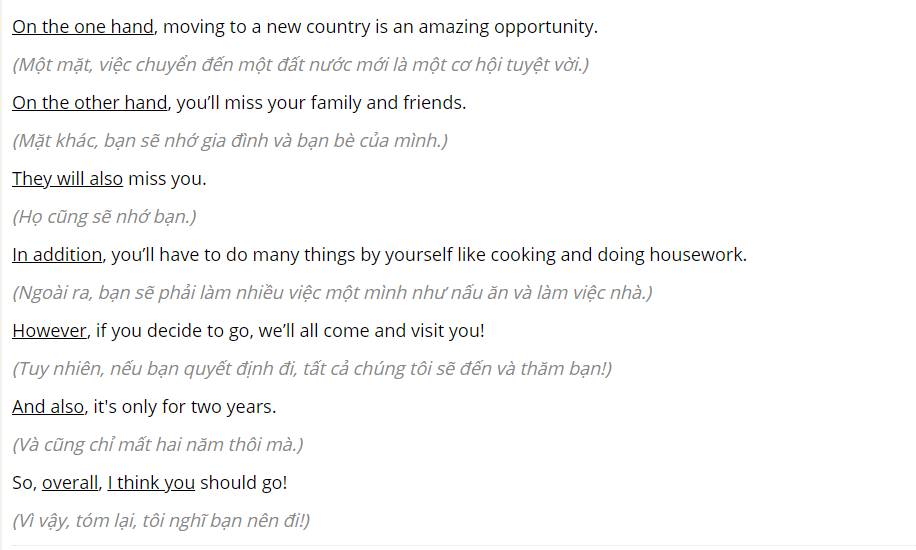
F. Read the information below and then underline the words for comparing and contrasting in the email in E.
(Đọc thông tin bên dưới, sau đó gạch dưới các từ để so sánh và đối chiếu trong email ở bài E.)
| WRITING SKILL: Compare and Contrast (Kỹ năng viết: So sánh và Đối chiếu) |
When you compare and contrast different ideas and choices, you can use these linking words and phrases: (Khi bạn so sánh và đối chiếu các ý tưởng và lựa chọn khác nhau, bạn có thể sử dụng các từ và cụm từ liên kết sau:) Describing similarities: It also ... / In addition, ... / Similarly, ... / Both ... (Mô tả sự tương đồng: Nó cũng ... / Ngoài ra, ... / Tương tự, ... / Cả ...) Comparing differences: On the one hand, ... / On the other hand, ... / However ... / In contrast ... (So sánh sự khác biệt: Một mặt, ... / Mặt khác, ... / Tuy nhiên ... / Ngược lại ...) Concluding: Overall, ... / On the whole, ... / I think ... / In conclusion, ... (Kết luận: Nhìn chung, ... / Về tổng thể, ... / Tôi nghĩ ... / Kết luận, ...) |
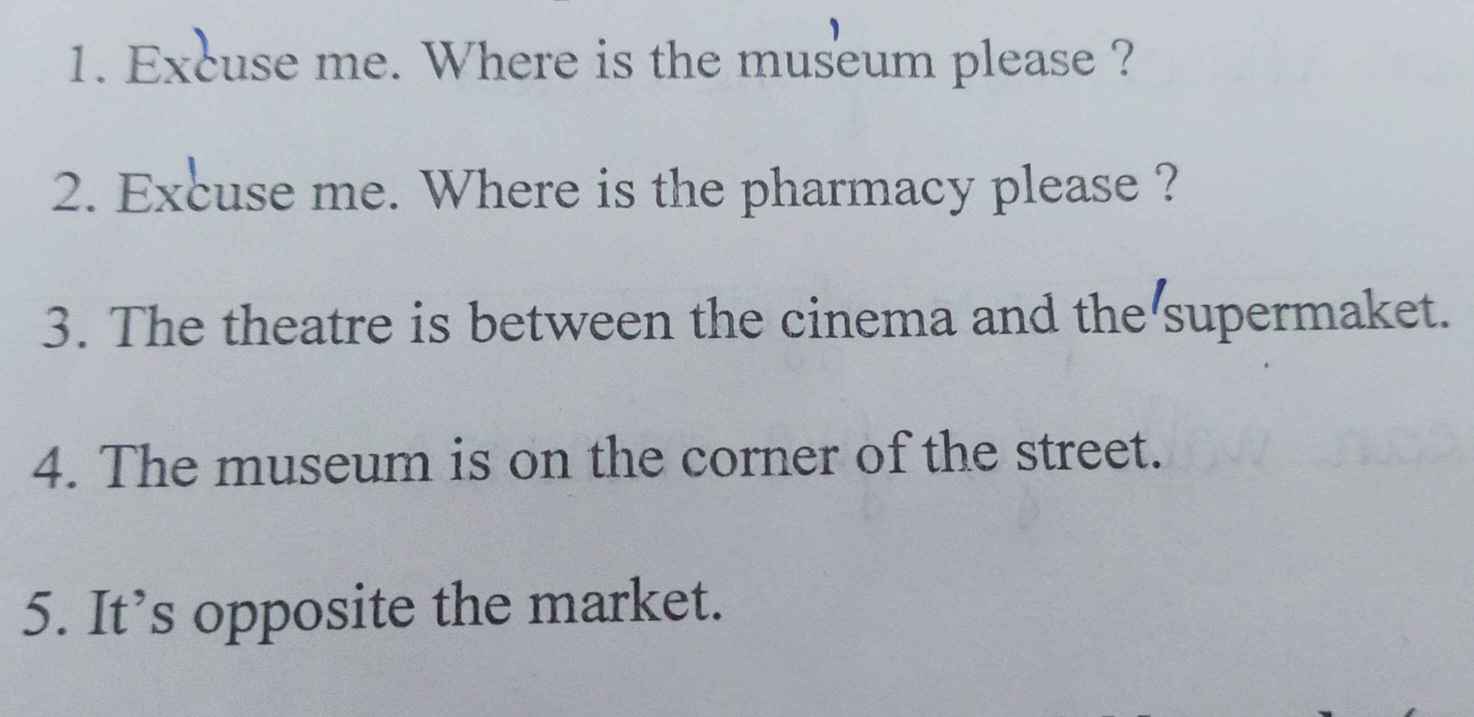
Đầu bài : Underline and put the street for the words in the sentences